
Nikunj Saraf, Vice President Choice Wealth, answers your queries.
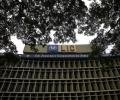
At a closed-door meeting with global investors, the largest asset manager in the country boasted of its nearly Rs 37 trillion assets under management (AUM) - 16.6 times that managed by the second-largest insurer SBI Life. The numbers are as of March 31, 2021. The assets of LIC are 1.2 times the net assets of the entire Indian mutual fund industry, which had AUM of Rs 31.43 trillion as of March 31, 2021 (about Rs 37.3 trillion until November this year). The standalone assets that LIC manages are equal to 18.7 per cent of India's GDP and worth more than gross domestic product (GDP) of the UAE, Bangladesh, Malaysia, Singapore, Hong Kong, South Africa, New Zealand, and Pakistan.

'We aim at establishing India as an early talent hub on a global scale and are actively recruiting professionals in areas like cybersecurity, machine learning, data science, and other relevant fields.'

Omkeshwar Singh, Head, Rank MF, a mutual fund investment platform, answers your mutual fund queries.

Piramals are the largest investors in the Indian real estate sector after HDFC, with investments worth $3 billion already.

Ajit Mishra, vice president, research, Religare Broking, answers your stockmarket queries.

Omkeshwar Singh, Head, Rank MF, a mutual fund investment platform, answers your queries.

India Inc's investments abroad in April-June 2015 have once again risen to $1.3 billion.

Omkeshwar Singh, head, Rank MF, a mutual fund investment platform, answers your queries.

PharmEasy has acquired Medlife for an undisclosed amount, the e-pharmacy unicorn said on Tuesday. The deal will make PharmEasy the largest player in the domestic online pharmacy sector, with the combined entity set to serve 2 million customers a month.


Omkeshwar Singh, Head, Rank MF, a mutual fund investment platform, answers your queries.

Omkeshwar Singh, head, Rank MF, a mutual fund investment platform, answers your queries.

Omkeshwar Singh, Head, Rank MF, a mutual fund investment platform, answers your queries.
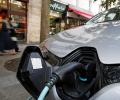
Automobile manufacturers, new and old, as well as ancillary suppliers are set to spend a combined Rs 70,630 crore over the next five years on either entering the electric vehicle segment or stepping up their presence in it. Data culled from announcements made by firms shows India, the world's fifth largest automobile market, is poised to receive one of the biggest capex pushes ever to fuel the transition from internal combustion engines to electric motors and batteries as part of a green drive. The EV push, egged on by the government's emphasis on electric mobility to meet its net zero targets, is expected to yield at least 25 electric vehicles - new ones as well as electrified versions of existing vehicles running on internal combustion engines.

Fast-moving consumer goods major Dabur India is set to enter the branded spices and seasoning category. It has signed an agreement to acquire 51 per cent in Badshah Masala for a cash consideration of Rs 587.52 crore. The acquisition, the company says, is in line with its strategic intent to expand its food biz to Rs 500 crore in three years.

IT major TCS CEO Rajesh Gopinathan has reigned, and the company nominated its global head of the BFSI division K Krithivasan as the CEO Designate with immediate effect, the firm said on Thursday. Gopinathan will continue with the company till September 15, 2023, to provide transition and support to his successor.

Nikunj Saraf, Vice President Choice Wealth, answers your mutual fund queries.

India's electric mobility goal, which has so far been riding on two wheels, is all set to graduate to four wheels. At least, the journey has begun. Hyundai Motor India said it would invest Rs 4,000 crore till 2028 to launch half-a-dozen electric vehicles (EVs) in India. It would eventually straddle premium and mass segments. The first of these - the electrified version of an internal combustion engine (ICE)-powered model - will go on sale as early as next year.

To attract bidders, the government had decided to hive of around Rs 35,000 crore of the company's debt into a separate subsidiary, leaving around Rs 23,286 crore to be absorbed by the new bidder.

Indian CEOs might like to make some serious course correction.

The Tata Sons controversy has raised governance concerns. Arun Duggal and Mohandas Pai on the role of independent directors in such conflict situations.

In a departure from its stand, the government has decided to go ahead with the privatisation of the four airports.

Nikunj Saraf, Vice President Choice Wealth, answers your queries.
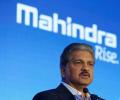
With increased consumer awareness and government support in place, it is the opportune time to enter the electric passenger vehicle segment, Mahindra Group Chairman Anand Mahindra said on Monday. With an eye on gaining leadership in the electric four-wheeler segment, the Indian auto major announced that it will launch five new electric Sports Utility Vehicles (SUVs) for both domestic and international markets, with the first four expected to hit the road between 2024 and 2026. The company would introduce the first of the five e-SUVs towards the end of 2024, starting with the Indian market.

Ajit Mishra, vice president, Research, Religare Broking, answers your queries.

In 2012, India attracted $22.78 billion of FDI, according to the data by Department of Industrial Policy and Promotion.

Ajit Mishra, vice president, research, Religare Broking, answers your queries.

Experts said the 20 per cent drop in the market poses a challenge for companies that have set the ball rolling on their IPO plans as valuations will now have to realign. This could entail more dilution or lowering of the issue size.

Omkeshwar Singh, head, Rank MF, a mutual fund investment platform, answers your queries.

However, the IT firms will get some benefits, as software exports from their Chinese campuses will yield more in local currency

Year 2013 saw business leaders facing the ire of hostile investigative agencies.

Omkeshwar Singh, head, Rank MF, a mutual fund investment platform, answers your queries.

This is the largest single dose of equity infusion into the joint venture since its launch in January 2015.

The compact sedan Zest competes with the established brands like Maruti D'zire, Honda Amaze and Hyundai Xcent.

Most airlines have fattened their profits, turned the corner, or cut their losses, except AirAsia India.

'For all of us at Amazon, it is 'Bharat first'.' 'We are keeping the Indian customer at the centre of what we are doing.'
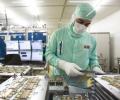
Mumbai-based Indian Semiconductor Manufacturing Company (ISMC) and Singapore-headquartered IGSS Ventures have one strategy in common: They have told the government in their application for semiconductor fabrication plants that they will export the bulk of the chips they make in India in the initial five or 10 years. The third applicant, Vedanta-Foxconn, which is also building a fab plant, has said it will concentrate on the needs of consumer electronics and mobile device markets, and earmark 80 per cent of output for domestic consumption, but has not specified its customers. Finding a viable domestic market could well be the biggest challenge for India's renewed tryst with semiconductors. Fab plants do not sell directly to end users but to intermediary chip design companies - such as Qualcomm or MediaTek.

'As the interest rates rise, people are going to say why should I be taking big risks when I can get 4 to 5 per cent in a bank account.' 'So, I think you have to change your thinking.' 'You need to look at the balance sheet, look at dividends.' 'These issues that have been ignored.'

As many as 19 firms, including Reliance Industries Ltd (RIL), Adani Group and Tata have evinced interest for setting up solar manufacturing units under a production linked incentive scheme of the government. In April this year, the Union Cabinet approved a Rs 4,500 crore production linked incentive (PLI) scheme to boost domestic manufacturing capacity of solar PV modules. The scheme is aimed at adding 10,000 MW manufacturing capacity of integrated solar PV modules entailing direct investment of Rs 17,200 crore.
